
Screen printing
Your best choice for printing on textiles
Method used to produce templates for screen printing
Our preparations for screen printing on T-shirts, sweatshirts and other textiles depend on the nature of the template supplied, the textile material, and the colour of the fabric to beprinted. Solid raster-free areas are printed using the Pantone C colour system. Two different printing methods are available for raster templates – printing with CMYK processcolours and or printing with Pantone C spot colours. Pantone C inks are more often used for textile printing because they are lustrous and distinct.
Printing on textiles in spot colours
The most commonly used procedure for textile screen printing draws on the Pantone C system. It is the most commonly used allover printing without rasters; the printing does not support smooth transitions among colors. The colors are based on the Pantone scheme.
Separation printing
Technology that achieves the best results when printing raster designs on textiles in the Pantone C system. This technology is suitable both for small and larger batches. For larger batches it is less expensive than digital printing. Full-color separation allows making large print formatsand processing large batches in real time. This full-colorraster printing is done by means of spot colors in contrast to the CMYK method. Special software provides theoptimal distribution of the spot colors and by blending the different colors it achieves the desired color transitions even in complex motifs. This method also takes into
Screen printing in CMYK mode
Printing of full-colour raster designs in the CMYK colour system. Full-color raster printing using the CMYK mode is printing within the entire color spectrum of 4 colors: cyan, magenta, yellow, and black. This method is mainly recommended for white textiles. It may not meet the standard requirements for printing if applied to dark textiles. The templates for this method should be prepared in the same manner as the ones for the color separation printing.
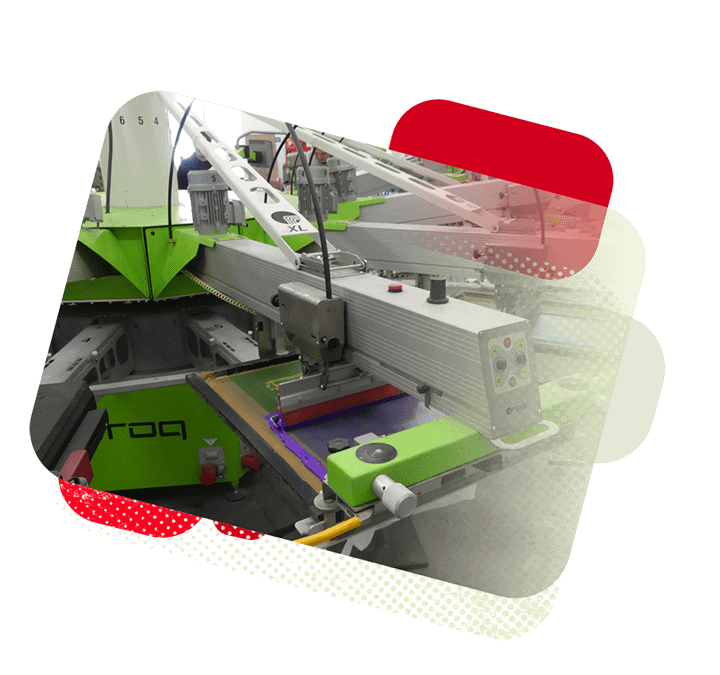
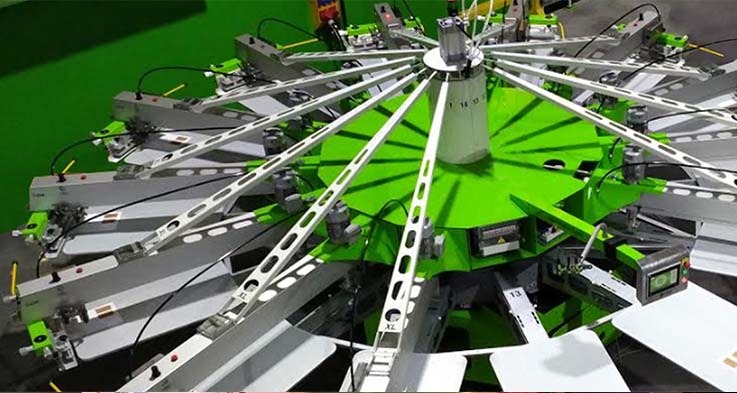
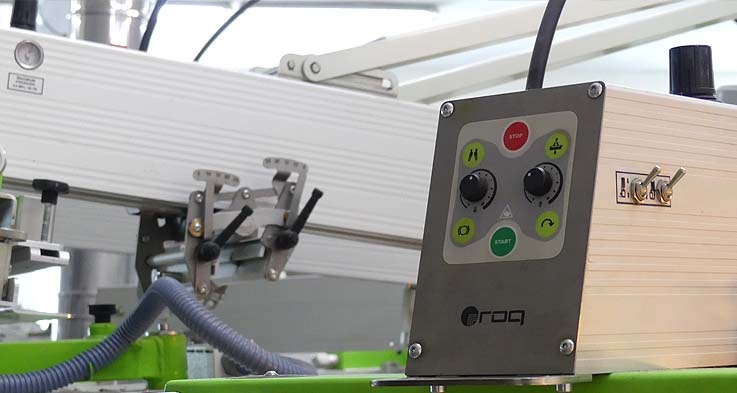
 ROQ You 14/12ROQ You 12/10
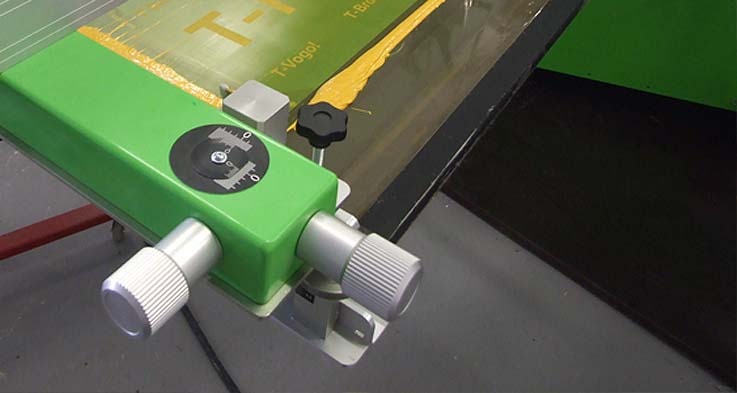
- ROQ You, těrka v závěsuROQ You, ovládání tiskové hlavy z ramene stroje
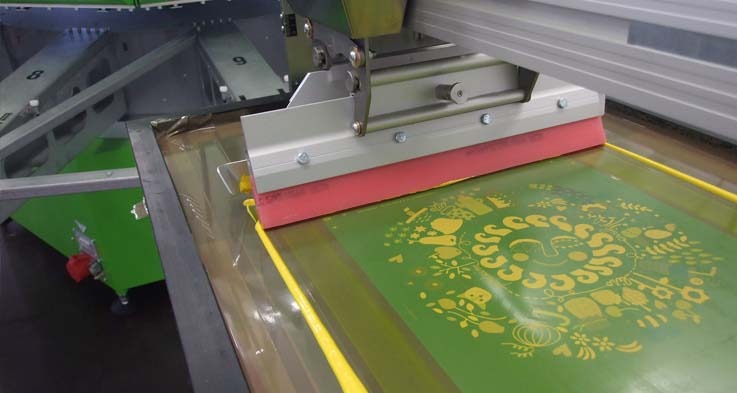
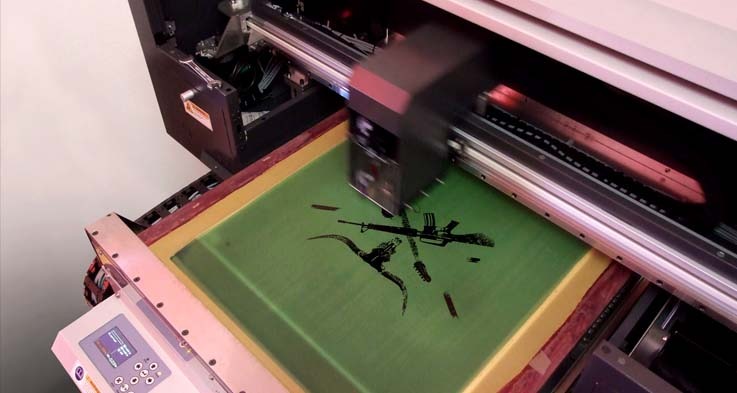
- ROQ You micro registraceM&R I-Image SR, tisková hlava
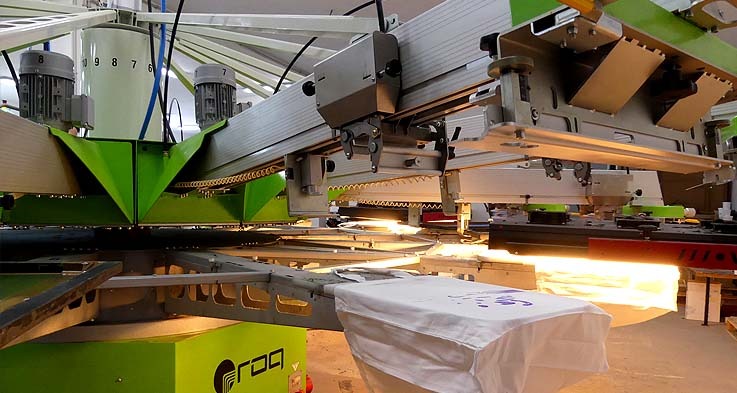
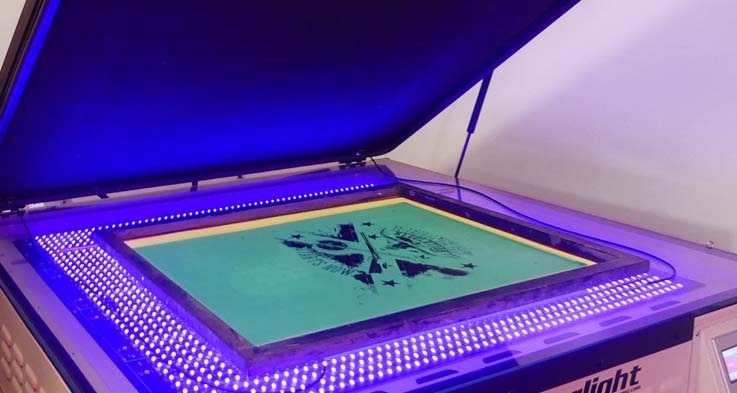
- M&R Starling, LED osvitkaSanco Technologies Ltd. horkovzdušný plynový tunel
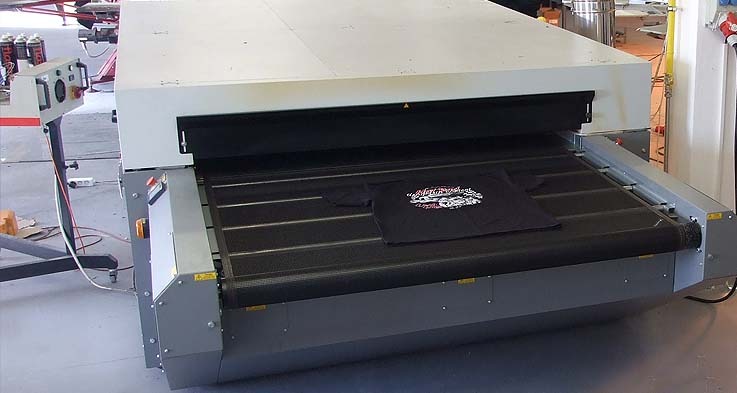
Other screen printing options
Do you have specific requirements for the nature of screen printing on textiles? We can achieve the desired result with the chosen technological procedures. For example, glossy to
Soft, breathable printing on textiles
It is standard practice to start by printing underbase white ink on coloured fabric. Only then is the actual print itself applied. The application of several layers of ink on top of each other creates an uncomfortable, non-breathable “pancake” effect. This is especially true when printing large solid areas. There are several ways to prevent this problem. Water inks, which do not form a thick coating, retain softness and breathability. These inks are less pronounced and duller than plastisol inks. Alternatively, we can replace conventional inks with discharge inks, which decolourise the fabric and can then be applied directly to the decolourised fibre. As a result, the ink combines perfectly with the textile fibre. The print is breathable and very soft to the touch, even on dark textiles. The colours retain their high opacity and saturation. They are bright, but not shiny. We use discharge printing as a standard technology at no extra charge. Discharge printing cannot be used on textiles that are not reactively dyed. Discharge printing may not meet the stanfactoryprint.
Screen printing inks
Screen printing allows you to choose from different types of inks depending on the textile material and the intended purpose of the textile.
Plastisol inks
Plastisol inks are the most frequently used inks for textile printing. They are rich and have excellent covering power. Moreover, they meet the requirements for distinctive, rubber-like printing. On the other hand, by technological procedures it is possible to achieve very soft and breathable printing. They are not resistant to high temperatures sothat they cannot be ironed.
Water-based inks
Water-based inks are delicate and pleasant to touch. They are less distinctive and dimmer than plastisol inks. The inks are suitable for printing on highly elastic materials such as swimwear fabric. Also, they withstand high washing temperatures up to 90 degrees and can be ironed. Water-based inks are environmentally friendly and they are suitable for printing on underwear or children’s clothing.